Pool Chemicals
Guide
As the owner of a swimming pool you want beautiful clear blue water without the hassles. Blue Wave chemicals are a complete line of high quality products that will simplify pool care and make your water sparkle. Inyo Pool Products is there to teach you about keeping your water clean from spring start-up to winter closing.
Blue Wave's Easy Pool Care 4-Step Program will give you simple step-by-step instructions that will insure crystal clear water. By using Blue Wave products, you will insure that your pool is only using high quality chemicals that are free of contaminants. Since all Blue Wave chemicals are formulated to work together, it is not a good idea to mix different brands of pool chemicals.
This guide is designed to educate you about Blue Wave programs and some of our products. In the event of pool water questions or problems, it is always best to turn to Inyo Pool Products for expert advice and simple solutions.
SPRING START-UP
-
Remove your pool cover
If you use a solid cover, drain the water off the cover. (Be sure not to set an automatic pump on a cover seam, as this will drain water from inside the pool.) Clean the cover thoroughly and let dry in the sun before storing it. Be sure to remove any debris (twigs, leaves, etc.) that may have gotten into your pool water.
-
Fill the pool
Add enough water to bring the water level to the middle of the skimmers.
-
Check your pool's equipment
Before starting up your pump and filter system, be sure the main drain and inlets are open. Make sure that the pump and skimmer baskets are in place and free of debris. Your pump and filter are a very important part of keeping your pool water clean and clear. If your filter was not cleaned before your pool was closed, clean it now. Blue Wave FILTER CLEAN removes the build-up of grease, oil, and scale in your filter allowing it to operate more effectively and efficiently while extending your filter's life.
-
Test your water
Start up your pool equipment and let it run for 24 hours before taking a water sample. Be sure that you take a sample from at least 1 foot below the surface. With your test kit or test strips, test the water for free chlorine, pH, and total alkalinity. Use the test results to bring your pool up to the ideal range for those results using the chart below
-
Test for pH and Sanitizer Levels
If you test the water yourself, check the pH and free chlorine or bromine levels. The chart below provides the proper levels to keep your water crystal clear.
Test Factor |
Ideal Range |
Free Chlorine |
1.0 to 3.0 PPM |
Total Bromine |
1.0 to 3.0 PPM |
pH |
7.2 to 7.6 PPM |
Total Alkalinity |
80 to 150 PPM |
| |
|
Calcium Hardness |
|
- Plaster Pools |
200 to 275 PPM |
- All Others |
125 to 300 PPM |
-
The Easy Pool Care Program
Now that the pool is up and running, we recommend following our 4-Step Easy Care Program to ensure clear, brilliant water.
Ask Inyo Pool Products about complete, easy-to-use spring start-up kits. These kits are formulated with just the right amount of chemicals to get your pool ready for swimming.
BEFORE THE CHEMICALS
Circulation & Filtration
The pump and filter form the heart of any pool maintenance program. Without a strong, efficient pump and filter, keeping you pool water clear will be much more difficult and expensive. The best time to run your pump is during the day for at least ten hours.
Your filter removes both visible debris and microscopic particles. It should be backwashed when the filter's pressure gauge indicates levels 8 to 10 lbs. above normal (always follow manufacturer instructions).
It is also important that your pool water circulates around the perimeter of your pool. Water in motion makes it harder for bacteria and algae to take hold. More debris is also directed to your skimmers where it can be captured by your filter. Adjust the eyeball jets in your inlets to move your pool water in a circular motion.
Cleaning
All swimming pools have areas that have little or no circulation. These areas of minimal circulation are the breeding grounds for problems like algae growth. The walls and floor should be brushed and vacuumed once a week. Even if you use an automatic pool cleaner, brushing once a week is a must.
Testing
It is very important to test your water regularly for two (2) key factors: pH and sanitizers.
By testing your water at least three times per week you will begin to understand how bather load, weather (rain and sun) and chemical application affect your pool's water. By regularly testing pH and sanitizer levels, you will ensure crystal clear water all season long.
EASY POOL CARE PROGRAM
Simple, Quick, & Effective
With Blue Wave's Easy Pool Care Program, keeping your pool water crystal clear is a snap. Just four easy steps and you are done in no time.
For best results, make sure to:
Have good water flow through the skimmers (or chlorinator, if installed). Operate your pump and filter 10 or more hours per day.
STEP 1: Balance the Water
It is vital that proper pH is maintained in your pool at all times. If the pH is outside 7.2 to 7.6 it will greatly reduce the effectiveness of pool chemicals. Test your pH level at least three (3) times a week and use either Blue Wave pH Reducer or Blue Wave pH Increaser to bring the pH into the proper range. If you are finding it difficult to maintain your pH, check your total alkalinity and be sure it is in the ideal range. Adjust total alkalinity levels accordingly. Click here for all of our Pool Balancers
STEP 2: Sanitize
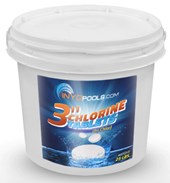
Blue Wave's 3 Sanitizing Tablets are the most efficient sanitizer to use in your pool. Our specially compressed 3 tablets are designed to dissolve slowly and steadily release free chlorine into your water to wipe out bacteria and keep your water clean. Plus, Blue Wave's 3 Sanitizing Tablets are stabilized to protect them from the sun's damaging rays, making them last longer and work more effectively. Always keep 3 tablets in your skimmer, floater, or automatic feeder to continue sanitizing.
Blue Wave also offers other stabilized chlorinated products in convenient sizes: Blue Wave 1 Sanitizing Tablets, Sanitizing Sticks, and Sanitizing Granules. Click here for all of Chlorine
STEP 3: Shock
As debris builds up in the water (such as perspiration, urine, suntan oil, and hair spray) it can cause eye and skin irritation and dull water. These contaminants tie up chlorine, keeping it from effectively sanitizing the water.
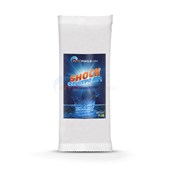
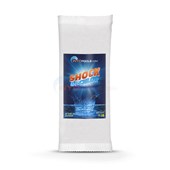
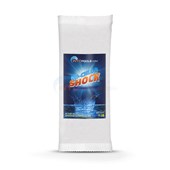
A treatment of Blue Wave Chlor-Burst or Blast Out once a week will oxidize these contaminants, freeing up the chlorine, and keeping your water crystal clear. Regular Blue Wave shock treatments will also kill resistant algae in the water.
Both Chlor-Burst and Blast Out are easy to use and available in convenient 1lb. bags. Chlor-Burst does not affect the pH or the calcium hardness making it ideal for hard water areas.
For pool owners that would prefer a non-chlorine shock after opening their pool, Blue Wave offers Blitz chlorine-free shock in handy 1lb. bags. Call Inyo Pool Products for details. Click here for Pool Shock
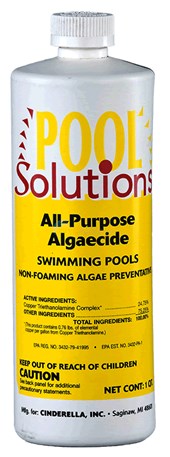
STEP 4: Algae Control
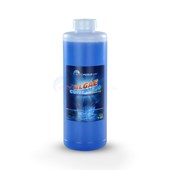
The best way to combat algae is to never let it get started. Blue Wave Halt 50 is a powerful algaecide that is very concentrated and low foaming. In fact, one quart treats up to 240,000 gallons!
Halt 50 is specially formulated to work well with other Blue Wave chemicals. It is non-metallic and will not discolor hair. Use Halt 50 weekly to prevent all types of algae from getting a foothold in your pool. Click here for all of our Speciality Products
Pool Care made easy
STEP 1: Balance The most important step. Use pH Increaser and pH Reducer to balance your pool water.
STEP 2: Sanitize For clean, bacteria-free water that is safe for swimming. Use stabilized 3 Sanitizing Tablets for long lasting effectiveness.
STEP 3: Shock Shock at least once a week for a trouble free season. Use Chlor-Burst or Blast Out .
STEP 4: Algae Control Prevent and kill all kinds of algae with our super concentrated Halt 50 algaecide.
because pool are for fun, not work!
WINTERIZING YOUR POOL
Investing the time to properly close your pool in the fall will make start-up a snap next spring season.
The proper way to winterize depends on the climate that the pool is located in. Consult Inyo Pool Products prior to closing for the proper procedure in your location. Ask about easy-to-use Blue Wave closing kits, pre-formulated for your pool size.
BLUE WAVE PRODUCTS FOR A CRYSTAL CLEAR POOL
pH Balancers
Because maintaining pH in the desired range is so important, we have made this the first step of our Easy Pool Care Program. PH balanced water makes routine chlorination, shocking and algae control chemicals work at their optimum levels. Blue Wave balancers include pH Increaser , pH Reducer , Alkalinity Increaser , and Hardness Increaser . Always test and adjust pH balancers before proceeding to adjust chlorine, shock or algaecide levels. It is the foundation of good pool water chemistry. Click here for our Pool Balancers
Shock Treatments
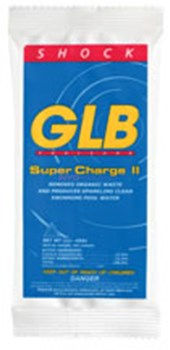
Shocking your pool is the third step in Blue Wave's Easy Pool Care Program. Shock treatments such as Blast Out , Chlor-Burst , and Blitz superchlorinate the water and destroy organic compounds introduced the pool water by bathers or air particles (such as lawn fertilizer). All Blue Wave shock treatments are available in easy to use 1lb. bags. Click here for our Pool Shock
TIP: Make a habit of shocking at least once a week for a trouble free season.
TIP: Remember to pre-mix Blast Out before adding it to the pool water to prevent bleaching of vinyl liners or other pool surfaces.
Algaecides
Green water is unattractive and it will make your pool unpleasant to swim in. Preventing algae is the fourth step of our Easy Pool Care Program. Halt 50 algaecide is powerful, non-staining, and very effective at preventing most types of algae.
Consult Inyo Pool Products for specialty algaecides that can be helpful in special situations where algae are a problem. Click here for our Specialty Products
Stain Preventers
Many water sources, especially wells, contain metals such as iron, copper, manganese. If these metals are left untreated they can stain your pool. Blue Wave's Super Rust & Scale prevents staining in metal laden water.
If you live in an area with high concentrations of iron or metals, test the water for metal content before filling your pool each spring. Click here for our Specialty Products
Clarifiers
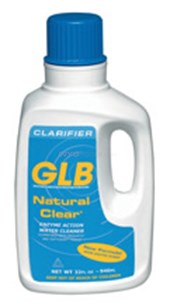
Concentrated Super Shimmer clarifier adds that extra sparkle to pool water. Plus, weekly use of Super Shimmer makes your filter operate more efficiently.
We also make strong cleaners to rid your pool of that water line ring and clean your filter. Ask your Inyp Pool Products Customer Service Representative about Tile & Vinyl Cleaner and Filter Clean . Click here for our Specialty Products
Water Testing
Testing your water frequently is the best way to insure crystal clear water and head off problems before they begin. We suggest that you test your water for free chlorine, pH, and total alkalinity at least 3 times per week. If any problems arise, call Inyo Pool Products for expert advice.
Spa Products
Spa owners can enjoy the same high quality chemicals that pool owners enjoy with Blue Wave spa products. This concentrated, high quality line of chemicals is specially formulated for hot water applications. Blue Wave spa products are compatible with each other to ensure a clean, safe soaking experience.
TROUBLE-SHOOTING GUIDE
Please note that this chart is to be used only as a guide since pool water problems are often the result of several factors.
PROBLEM |
POSSIBLE CAUSE |
SOLUTION |
CLOUDY WATER |
High pH |
Use pH Reducer to lower pH to 7.2 7.6 ppm. |
Dirty Filter |
Check filtration system. Backwash if needed. Use Filter Clean regulary. Use Super Shimmer to improve filter efficiency and add sparkle to the water. |
Low Free Chlorine |
Shock with Blast Out , Chlor-Burst , or Blitz to bring free chlorine level to ideal range of 1-3 ppm. |
High Total Alkalinity |
Use pH Reducer or pH Increaser to adjust pH to ideal range of 7.2 7.6 |
|
|
REDDISH BROWN WATER |
Dissolved iron or manganese in water |
Use pH Increaser or pH Reducer to adjust pH to 7.2 7.6 ppm. Use Super Rust & Scale as directed. Run filter until clear. |
|
|
|
EYE AND SKIN IRRITAION |
Combined chlorine (chloramines) level too high |
Shock with Blast Out , Chlor-Burst , or Blitz . Circulate overnight. Test and adjust free chlorine residual to ideal range of 1-3ppm. (May require another shock treatment.) |
pH level too high or too low |
Use pH Reducer or pH Increaser to adjust pH level to 7.2 7.6 ppm. |
|
|
CHLORINE ODOR |
Combined chlorine (chloramines) level too high |
Shock with Blast Out , Chlor-Burst , or Blitz . Circulate overnight. Test and adjust free chlorine residual to ideal range of 1-3 ppm. (May require another shock treatment.) |
|
|
CALCIUM SCALE FORMATION |
pH too high |
Use pH Reducer to bring pH level to 7.2 7.6 ppm. |
Total alkalinity too high |
Use pH Reducer to bring pH level to 100 150 ppm. |
Calcium content too high |
Use Super Rust & Scale as directed. |
|
|
CORROSION OF METAL PARTS |
pH too low |
Use pH Reducer to bring pH level to 7.2 -7.6 ppm. |
Total alkalinity too low |
Add alkalinity Increaser to raise total alkalinity to 80 - 150 ppm. |
|
|
HIGH CHLORINE CONSUMPTION |
High temperatures and heavy chlorine throughout the season |
Use Stabilizer at the start of each season. Always use stabilized Blue Wave chlorine, such as 3 Sanitizing Tablets. |
|
|
UGLY RING AT THE WATERLINE |
Grease and oil from swimmers |
Clean walls and surfaces regularly using Tile & Vinyl Cleaner. |
GLOSSARY
Algae Various forms of microscopic plant life that can rapidly grow and multiply in the presence of light. There are many varieties , some are free floating and others grow on surfaces. Some are more resistant to chlorine than others.
Algaecides Chemicals that prevent and control agae. Some are designed to kill specific types of visible agae.
Bacteria Germs that can get into your pool or spa by way of users and from the environment.
Balanced Water The correct ratio of mineral content and pH that prevents water from the environment.
Bromine An alternative sanitizer sometimes used in place of chlorine. Excellent for spas and indoor pools because it lasts longer in high heat and has no chlorine odor.
Calcium Hardness The amount of dissolved calcium in pool water. Should be approximately 150 175 ppm for vinyl-lined pools, 240 300 ppm for concrete or plaster pools. High hardness can cause cloudy water and scale. Lower levels can damage pool surface and equipment.
Chloramines Compound formed when chlorine combines with nitrogen from urine, perspiration, suntan oil, hair spray, etc. Chloramines cause eye and skin irritation and unpleasant odors.
Chlorine The most efficient and widely used sanitizer for ppols. There are two types: nonstabilized inorganic chlorines (i.e. calcium hypochlorite, lithium, sodium hypochlorite) and stabilized organic chlorines. The latter are preferred because they are stable in the presence of sunlight.
Chlorine Demand The chlorine required to eliminate contaminants in your pool. Chlorine may need to be added in large quantities before chlorine demand is satisfied.
Chlorine Residual The amount of free chlorine in your pool.
Cyanuric Acid A chemical compound that protects chlorine from loss due to sunlight. Also referred to as stabilizer.
Diatomaceous Earth (D.E.) A fine, powdery substance that comes from the calcified remains of prehistoric single-celled marine animals. This very porous substance is a great filtration media.
DPD The test reagent used to measure and indicated chlorine levels. The presence of chlorine turns the indicator to pink.
Dry Acid Blue Wave's pH Reducer. This granular product lowers pH and total alkalinity of pool water. Also referred to as sodium biosulfate.
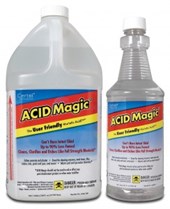
Liquid Acid A liquid chemical (muriatic or hydrochloric acid) used to reduce pH and total alkalinity. A dangerous, corrosive chemical that should be handled with care.
Muriatic Acid See liquid acid.
OTO A liquid test readent used to determine total chlorine. (See also DPD).
pH A measure of acidity or alkalinity of pool water. The ideal range is 7.2 to 7.6 ppm. Low pH results in corrosive water than can damage pool surfaces and equipment. High pH results in cloudy water and scale formation. Improper pH levels can also reduce the effectiveness of chlorine and cause swimmer discomfort.
Phenol Red A reagent used in testing pH.
Ppm Parts per million, the accepted measurement of chemical concentration in pool water.
Scale A hard, rough deposit found on pool surfaces or in pool plumbing. Results from hard water and high pH levels.
Soda ash Sodium carbonate; Used to raise the pH of pool water.
Sodium bisulfate (see dry acid)
Stabilizer (see Cyanuric Acid)
Shock treatment (see superchlorination)
Superchlorination Also known as a shock treatment. Adding a significant amount of chlorine to a pool in order to oxidize unwanted organic material and provide a quick free chlorine residual.
Total Alkalinity (TA) Affects and controls pH. If total alkalinity is too high, pH will be hard to adjust. If it's too low, pH will be unstable and difficult to maintain. The ideal range is 80 150 ppm, depending on the interior pool finish.
Click here for our Pool Chemicals